
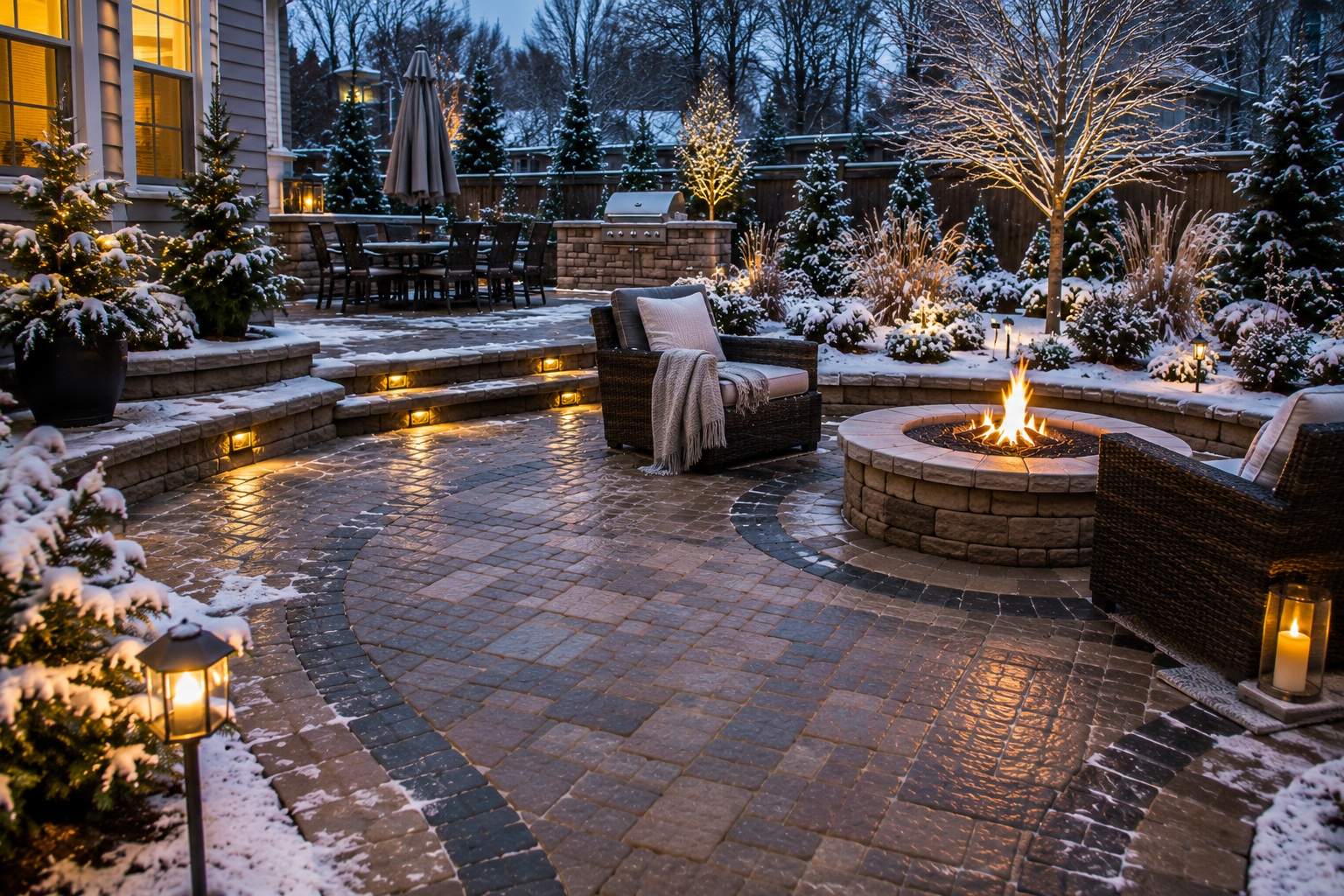
You finally got that beautiful new patio installed this year, and it made the whole backyard feel like a real extension of your home. Now winter’s rolling in, and it’s fair to wonder: does all that hard work just sit under a pile of snow for five months, hoping for the best? The short answer is no, not if you want it to look just as good next spring.
Rochester winters are tough on outdoor surfaces. Between heavy snow loads, repeated freeze-thaw cycles, and salt exposure, a patio that isn’t properly cared for can develop cracks, shifting, and staining that shows up the moment the snow melts. The good news is that winter patio care doesn’t require much time, just the right habits at the right moments. Whether your patio was installed as part of a full landscaping Rochester NY project or you inherited it from a previous homeowner, these tips will help it come through winter in good shape.
Why Winter Patio Care Actually Matters
It’s tempting to think of a patio as a low-maintenance, “set it and forget it” feature. And in many ways, it is, especially compared to garden beds or lawns. But Rochester’s specific winter conditions create a few real risks for hardscaping that are worth taking seriously.
Here’s what’s actually at stake if a patio is neglected all winter:
- Cracking from freeze-thaw cycles, especially if water gets trapped in small cracks and expands as it freezes
- Paver shifting or heaving, caused by ground movement beneath the surface
- Salt damage and staining, particularly on natural stone or lighter-colored pavers
- Mold or mildew growth, which can develop under snow cover in shaded areas
- Joint sand erosion, which weakens the overall stability of paver patios over time
None of these issues are inevitable. A little seasonal attention, part of any well-planned landscaping Rochester approach, prevents most of them entirely.
Clean and Prep Your Patio Before the First Freeze
The work that protects your patio through winter actually starts in late fall, before the first hard freeze sets in.
Steps to take before winter arrives:
- Sweep away leaves and debris, since decomposing organic matter can stain surfaces and trap moisture
- Power wash the patio if it’s been a while, removing dirt, algae, and buildup that can worsen over winter
- Inspect for existing cracks or loose pavers and address them now rather than letting freeze-thaw cycles make them worse
- Reapply joint sand to paver patios if it’s visibly low or eroded
- Apply a sealant if your patio material calls for one, since sealed surfaces resist moisture penetration far better than unsealed ones
Taking care of this before the ground freezes gives your patio the best possible starting point heading into the harshest months.
Choosing the Right Snow Removal Method
How you clear snow off your patio matters just as much as whether you clear it at all. The wrong tools or techniques can actually cause more damage than leaving snow in place.
Best practices for snow removal on patios:
- Use a plastic shovel instead of metal, since metal edges can scratch or chip paver and stone surfaces
- Avoid using a snow blower directly on pavers, as the auger can catch and dislodge loose or uneven stones
- Clear snow promptly after storms rather than letting it compact into ice, which is far harder to remove safely
- Don’t pile snow against outdoor furniture, walls, or structures, since melting snow can direct water where you don’t want it
- Leave a light dusting rather than scraping bare if your patio surface is prone to scratching, since a thin layer offers some protection
Be Careful With De-Icing Products
Ice on a patio is a real safety hazard, but not every de-icing product is safe for every surface. Choosing the wrong one can cause long-term damage that’s far more costly than the ice itself.
What to know about de-icing safely:
- Avoid rock salt on natural stone, since it can cause pitting, discoloration, and surface breakdown over time
- Choose calcium magnesium acetate (CMA) or sand as gentler alternatives for sensitive surfaces
- Test any product in a small, inconspicuous area first, especially on colored or stamped concrete
- Avoid excessive application, since more product doesn’t mean faster melting, just more potential for surface damage
- Rinse residue when temperatures allow, to prevent buildup from accumulating season after season
A landscaper Rochester NY homeowners trust for their outdoor spaces can often recommend the safest de-icing approach based on your specific patio material.
Protecting Outdoor Furniture and Fixtures
Your patio surface isn’t the only thing that needs winter protection. Furniture, fire pits, and other fixtures left exposed to Rochester’s winter weather can suffer just as much damage.
Steps to protect what’s on your patio:
- Store cushions and fabric elements indoors to prevent moisture damage and mildew
- Cover furniture with weatherproof covers if storage indoors isn’t an option
- Elevate furniture legs slightly with pads to prevent them from freezing directly to the patio surface
- Cover or properly store fire pits, especially wood-burning ones, to prevent rust and moisture damage
- Disconnect and drain any water features to prevent pipes or pumps from freezing and cracking
Managing Snow Load and Drainage
Heavy, wet snow common in Rochester winters puts real weight on hardscaping, especially raised patios, decks, or structures with pergolas overhead.
Things to watch throughout the season:
- Monitor snow accumulation on covered patios or pergolas, since excessive weight can stress structural elements
- Make sure drainage channels stay clear of ice buildup so meltwater has somewhere to go
- Watch for ice dams near any roofline that drains onto the patio area
- Address standing water issues promptly once temperatures rise, since repeated freeze-thaw cycling in wet spots causes the most damage
Good landscaping Rochester NY design typically incorporates proper drainage and grading from the start, which significantly reduces winter-related water problems down the line.
Spring Inspection: Catching Issues Early
Once the snow melts, it’s worth doing a quick walk-through of your patio before you start planning summer gatherings. Catching minor issues early is far easier and cheaper than waiting until they become bigger problems.
What to check once winter fades:
- Look for new cracks or chips that weren’t there before winter
- Check for shifted or uneven pavers, a sign the base beneath them may have moved
- Inspect joint sand levels and refill anywhere it’s visibly eroded
- Look for salt staining or discoloration that may need a gentle cleaning
- Test furniture and fixtures you stored away to make sure everything survived the season intact
A quick spring assessment, paired with knowledge from your original landscaping in Rochester NY installation, helps you catch small issues before they turn into expensive repairs.
When to Call a Professional
Some winter patio issues are simple DIY fixes, but others are worth bringing in an expert for, especially if you’re noticing recurring problems year after year.
Consider calling a professional if you notice:
- Significant shifting or sinking in sections of the patio
- Cracks that seem to be growing larger each season
- Drainage problems that weren’t there when the patio was first installed
- Uncertainty about which de-icing products are safe for your specific material
A team experienced in landscaping Rochester will be able to diagnose whether an issue is cosmetic or a sign of a deeper base or drainage problem that needs proper correction.
Why Proactive Care Pays Off
Patios represent a real investment, and the difference between a patio that lasts decades and one that needs early repairs often comes down to how it’s treated during the winter months it spends unused. A little seasonal attention protects that investment and keeps your outdoor space ready to go the moment warm weather returns.
If your patio was part of a broader landscaping Rochester NY project, following these winter care habits helps preserve not just the hardscaping itself, but the overall look and function of the yard design it was built to complement.
Frequently Asked Questions
Can I use a snow blower on my paver patio?
It’s best to avoid it. The auger can catch loose or uneven pavers and cause damage, so a plastic shovel is generally safer for hardscaped surfaces.
Is rock salt safe to use on my patio?
Not always. Rock salt can damage natural stone and some concrete surfaces over time, so it’s worth choosing a gentler de-icing product suited to your specific material.
Should I cover my patio furniture in winter?
Yes, if it’s not being stored indoors. Weatherproof covers help protect furniture from moisture, snow, and freezing temperatures throughout the season.
How do I know if my patio has winter damage?
Look for new cracks, shifted or uneven pavers, eroded joint sand, or salt staining once the snow melts as signs that repairs may be needed.
Do I need to seal my patio every year before winter?
Not necessarily every year, but checking your sealant’s condition annually and reapplying every few years, depending on the product, helps protect the surface through freeze-thaw cycles.
What’s the best time to schedule patio repairs after winter?
Early spring is ideal, once the ground has thawed and before summer entertaining season begins, giving time for proper repairs without disrupting your outdoor plans.