
Ever planted something that looked great at the garden center, only to watch it struggle or die within a season? There’s a good chance the problem wasn’t the plant. It was the soil underneath it. Rochester’s soil has its own personality, and if you don’t understand what you’re working with, even the best landscaping plans can fall flat.
Between heavy clay pockets, variable pH levels, and drainage issues caused by our long, wet winters and springs, Western New York soil can be tricky to work with. But once you understand what’s actually happening beneath your lawn and garden beds, you can make smarter choices that save you time, money, and a lot of frustration. Whether you’re planning a DIY garden bed or working with a landscaping Rochester NY homeowners trust, understanding your soil is the foundation (literally) of a yard that thrives.
Why Soil Matters More Than Most Homeowners Realize
It’s easy to focus on the fun parts of landscaping: picking out plants, choosing a patio design, planning where the flower beds will go. But none of that matters much if the soil underneath can’t support it. Soil affects everything from how well roots establish to how much water your yard holds onto (or doesn’t) during a storm.
Two of the biggest soil factors that affect landscaping success in Rochester are:
- pH level — how acidic or alkaline your soil is, which determines what nutrients plants can actually absorb
- Drainage — how well water moves through the soil, which affects root health, disease risk, and flooding
Get either of these wrong, and you’ll find yourself replacing dead plants, dealing with soggy lawns, or fighting a yard that just never looks quite right no matter how much you water or fertilize.
What Rochester’s Soil Is Actually Like
Western New York sits on a mix of glacial soil types, and depending on your specific neighborhood, your yard could have anything from sandy loam to dense, heavy clay. Clay soil is especially common throughout the Rochester area, and it comes with its own set of challenges.
Here’s what tends to show up most often in Rochester yards:
- Heavy clay soil — common in many neighborhoods, holds water longer and compacts easily
- Slightly acidic to neutral pH — typical of the region, though it varies block by block
- Poor natural drainage in low-lying areas — especially in yards near Lake Ontario’s watershed or with minimal slope
- Seasonal saturation — spring thaw and heavy rain can leave soil waterlogged for weeks at a time
None of this means your yard is doomed. It just means your landscaping plan needs to work with these conditions instead of ignoring them.
Understanding Soil pH and Why It Matters
Soil pH is measured on a scale from 0 to 14, with 7 being neutral. Most plants prefer a slightly acidic to neutral range, somewhere around 6.0 to 7.0, though some plants have very specific preferences outside that range.
When your soil’s pH is off, plants struggle to absorb nutrients even if the soil is technically “rich” in them. This is one of the most common (and most overlooked) reasons plants underperform.
How to Test Your Soil’s pH
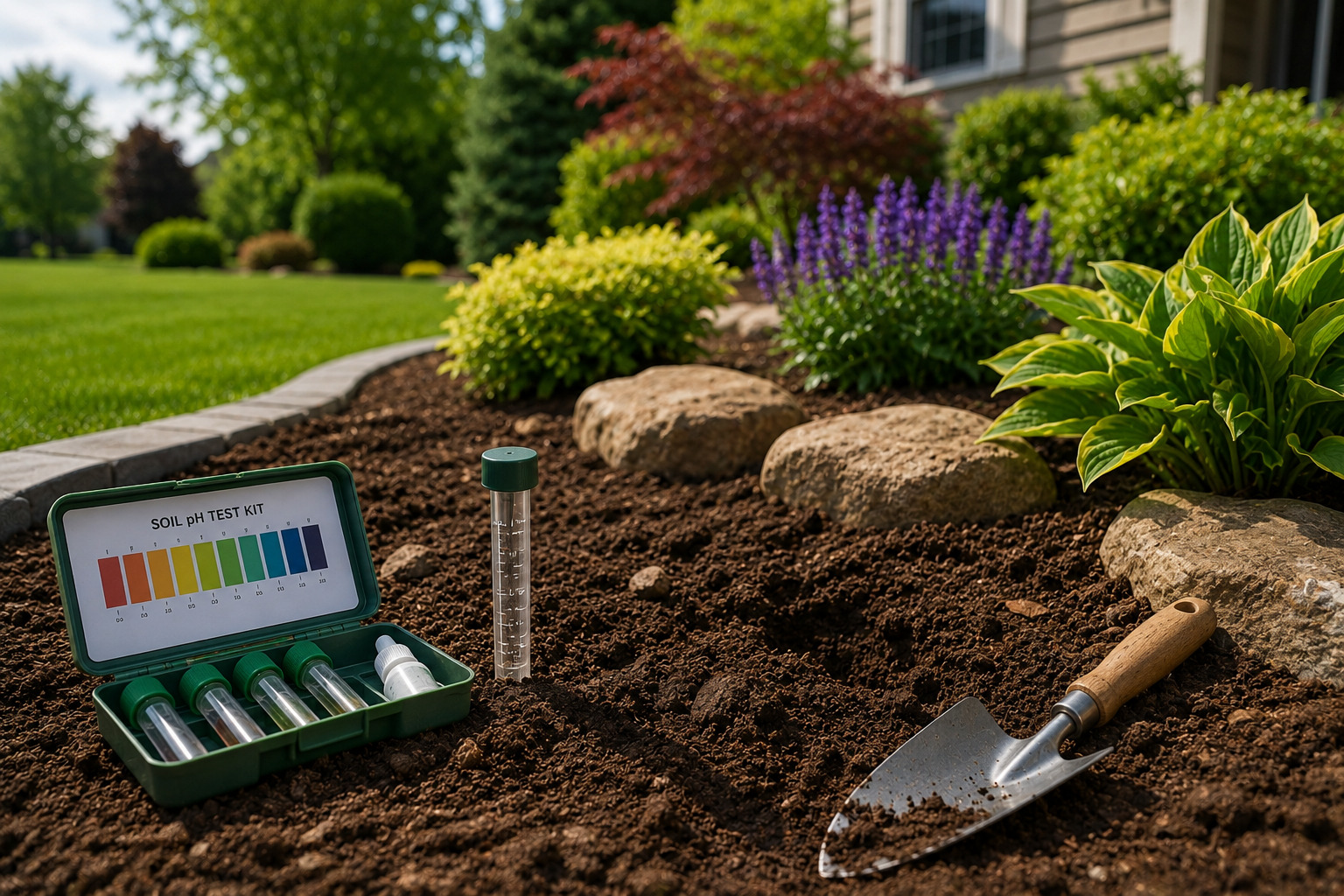
- Home testing kits — inexpensive and widely available, good for a general baseline reading
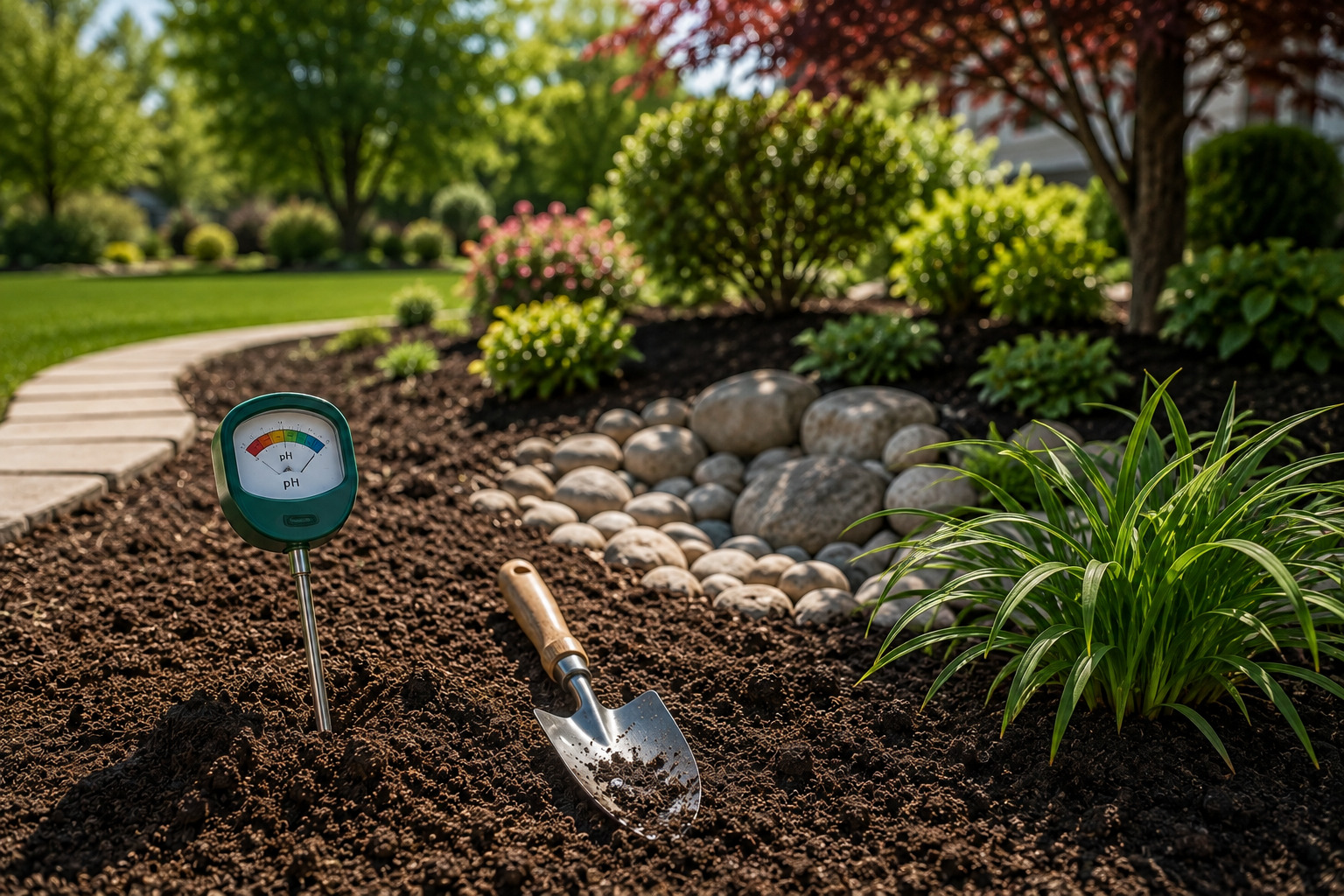
- Digital soil pH meters — slightly more accurate and reusable for ongoing monitoring
- Professional soil testing — sending a sample to a lab or having a landscaping Rochester NY company test it gives you the most detailed picture, including nutrient levels
What to Do If Your pH Is Off
- If soil is too acidic (low pH): add lime to raise the pH gradually over a season
- If soil is too alkaline (high pH): add sulfur or organic matter like compost to lower it over time
- Retest periodically — pH changes slowly, so check every year or two rather than expecting instant results
Why Drainage Is Just as Important as pH
Even with perfect pH, a yard with poor drainage will still struggle. Water that doesn’t move through soil properly suffocates plant roots, encourages fungal disease, and can lead to standing water that damages lawns, patios, and even your home’s foundation over time.
Signs Your Yard Has a Drainage Problem
- Water pools in the same spots for hours (or days) after rain
- Grass in certain areas stays soggy or develops a spongy feel
- Plants in specific beds consistently die despite proper care
- Mulch floats or washes away during heavy rain
- You notice erosion or bare patches where water flows downhill
Common Causes of Poor Drainage in Rochester Yards
- Heavy clay soil that doesn’t allow water to filter through quickly
- Compacted soil from years of foot traffic, construction, or lawn equipment
- Improper grading that directs water toward the house or low points in the yard instead of away
- Lack of organic matter, which normally helps soil structure and water movement
Practical Drainage Solutions for Rochester Yards
The good news is that drainage problems are almost always fixable once you understand the cause. Depending on the severity, solutions can range from simple soil amendments to more involved landscaping projects.
Effective options include:
- Adding organic matter like compost to improve soil structure and water movement
- Aerating the lawn to reduce compaction and help water and air reach the roots
- Regrading problem areas so water flows away from the house and low spots naturally
- Installing French drains to redirect water away from trouble areas underground
- Creating dry creek beds that both manage water flow and add a decorative landscaping feature
- Building raised garden beds in areas with particularly poor natural drainage
- Choosing water-tolerant plants for low-lying areas that stay consistently damp
A professional landscaper Rochester homeowners have worked with before can assess your yard’s grading and soil composition to recommend the right combination of these fixes, since not every yard needs the same solution.
Improving Clay Soil for Better Planting Success
If your yard has heavy clay soil (and in Rochester, there’s a good chance it does), there are ways to work with it rather than fight against it.
- Amend with compost or organic matter every planting season to gradually improve soil texture
- Avoid working clay soil when it’s wet, since this compacts it further and makes the problem worse
- Choose plants that tolerate clay soil well, such as daylilies, black-eyed Susans, and many native shrubs
- Mulch garden beds to reduce compaction from rain impact and help regulate moisture
- Avoid over-tilling, which can break down soil structure over time instead of improving it
Matching Plants to Your Soil Conditions
Rather than trying to completely transform your soil overnight, one of the smartest long-term strategies is choosing plants suited to what you already have. This saves money on amendments and reduces ongoing maintenance.
- For heavy clay and poor drainage, look at native perennials, ornamental grasses, and shrubs bred for wet tolerance
- For slightly acidic soil, consider hydrangeas, azaleas, and rhododendrons, which thrive in that range
- For low spots that stay damp, plants like Siberian iris and swamp milkweed can handle consistent moisture
- For well-drained, higher areas, you have more flexibility with drought-tolerant perennials and ornamental grasses
Why Professional Soil Assessment Is Worth It
DIY soil testing kits are a great starting point, but they only tell part of the story. A landscaping Rochester NY company with local experience can assess your yard’s grading, drainage patterns, and soil composition together, rather than looking at pH in isolation. This matters because a yard can have “acceptable” pH and still fail plants due to compaction or poor grading, or vice versa.
Working with a professional also means you get a plan tailored to your actual property instead of generic advice that doesn’t account for Rochester’s specific soil quirks, glacial clay deposits, and seasonal water patterns.
Frequently Asked Questions
How do I know if my Rochester yard has clay soil?
Clay soil feels sticky and dense when wet, forms hard clumps when dry, and tends to drain slowly, leaving puddles that linger long after rain has stopped.
What’s the ideal soil pH for most plants in Rochester?
Most plants do best in a slightly acidic to neutral range, generally between 6.0 and 7.0, though some plants like hydrangeas and azaleas prefer more acidic conditions.
How often should I test my soil’s pH?
Testing every one to two years is usually sufficient, since pH changes gradually rather than suddenly, especially if you’re not actively amending the soil.
Can poor drainage really damage my home’s foundation?
Yes. Water that consistently pools near your foundation instead of draining away can lead to basement moisture issues and, over time, structural damage.
Do I need a professional to fix a drainage problem, or can I DIY it?
Minor issues like adding compost or aerating the lawn are doable as DIY projects, but larger grading problems or drainage systems like French drains are usually best handled by an experienced landscaper Rochester NY property owners can trust.
What’s the fastest way to improve heavy clay soil?
Consistently adding organic matter like compost over multiple seasons is the most reliable long-term fix, since clay soil improves gradually rather than overnight.