
Table of Contents
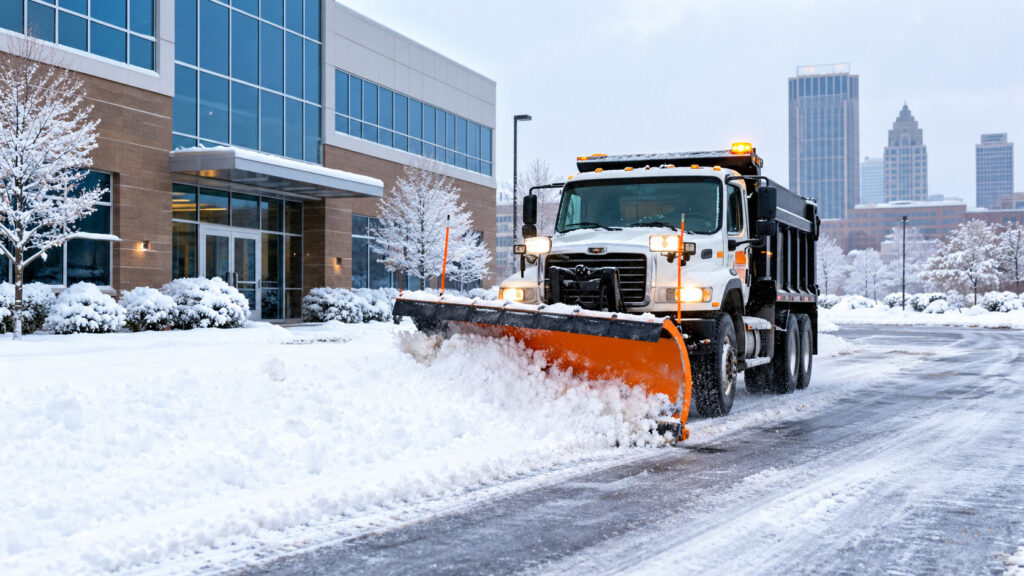
Winter preparation for a commercial property involves far more than simply booking a plow truck. Between liability concerns, tenant expectations, budget approvals, and site-specific logistics, there are dozens of details that can slip through the cracks if you’re working from memory rather than a plan. This checklist is designed to help property managers organize their Commercial Snow Removal Rochester NY planning from start to finish.
At Marble Landscaping, we walk commercial clients through this process every fall. Below is a practical, step-by-step framework covering everything from initial site assessment to mid-season review, so your property stays safe and accessible through whatever Western New York winter brings.
Step 1: Complete a Property Assessment
Before contacting any provider, take time to document what your property actually requires. A thorough assessment should capture:
- Total square footage of paved areas requiring clearing
- Number and location of building entrances and exits
- Pedestrian walkways, ramps, and ADA-accessible routes
- Loading docks or delivery access points
- Available snow storage areas that won’t block sightlines or fire lanes
- Existing landscaping features that need protection during plowing
Having this information ready makes quotes more accurate and helps providers give you a realistic sense of scope from the first conversation. It also gives you a baseline document you can reuse each year when renewing your Snow Removal Rochester NY coverage.
Step 2: Define Your Service Priorities
Not every area of a commercial property needs the same urgency. Establishing priorities early helps your provider structure an effective plan for Snow Removal Rochester NY coverage:
- Main entrances and ADA parking — Typically the highest priority for safety and compliance
- Primary parking areas — Needed before opening hours for customer and employee access
- Secondary lots or overflow parking — Can often be cleared after priority zones
- Loading and receiving areas — Timed around your delivery schedule
- Perimeter walkways — Important for pedestrian safety, especially in shaded areas prone to refreezing
Step 3: Set Your Budget Parameters
Commercial snow removal represents a meaningful line item, and planning ahead allows for more accurate forecasting. Consider:
- Historical snowfall data for your specific area of the region
- Property size and complexity, including number of access points
- Whether de-icing is included in your base contract or billed separately
- Contract structure, since seasonal pricing offers predictability while per-push billing varies
- A contingency buffer for winters that significantly exceed typical snowfall
Building a realistic budget in early fall gives you time to secure internal approvals before Commercial Snow Removal Rochester NY providers begin filling their seasonal schedules.
Step 4: Research and Shortlist Providers
Rather than simply searching for snow removal near me and calling the first result, take a structured approach to building your shortlist. Look for providers who demonstrate:
- Commercial-grade equipment suited to your property’s size
- Insurance coverage specific to snow and ice operations
- Experience with properties comparable to yours
- References from other commercial clients in the area
- Established local presence and route familiarity
A provider who handles residential driveways well may not have the equipment or staffing to service a large commercial lot effectively, so matching scale matters.
Step 5: Schedule Site Walkthroughs
Once you’ve narrowed your options, invite finalists to walk the property with you. This step is often skipped, but it’s one of the most valuable parts of planning Commercial Snow Removal Rochester NY service. During the walkthrough, cover:
- Where snow can and cannot be stored on-site
- Priority zones and the sequence in which they should be cleared
- Any known trouble spots, such as areas prone to drainage issues or ice buildup
- Locations of curbs, islands, and landscaping features that need marking
- Access constraints, including gates, bollards, or narrow drive aisles
A thorough walkthrough often reveals details that never come up over the phone, and it gives providers the context they need to quote Snow Removal Rochester service accurately rather than relying on square footage alone.
Step 6: Review Contract Terms Carefully
A clear written agreement protects both parties. Before signing, confirm the contract specifies:
- Trigger depth — The exact snowfall accumulation that prompts a service visit
- Response time — How quickly crews are dispatched after the trigger is reached
- Scope of service — Which areas are covered, and whether walkways and de-icing are included
- Pricing structure — Seasonal, per-push, or per-inch, with any surcharges clearly stated
- Documentation — What service records are provided after each visit
- Contingency plans — What happens if equipment fails or a storm exceeds capacity
Step 7: Establish Communication Protocols
During an active storm, clear communication prevents unnecessary stress. Agree in advance on:
- Who your primary point of contact will be during storm events
- How you’ll be notified when crews are dispatched and when service is complete
- The best method to reach someone if a scheduled visit is significantly delayed
- How properties are prioritized when demand spikes across the region
Property managers who establish these protocols before the first storm rarely find themselves wondering whether their site has been forgotten.
Step 8: Prepare the Property Physically
Before the season begins, complete these physical preparations:
- Mark curbs, islands, and landscape beds with stakes or flags so operators can see boundaries under snow
- Repair cracked or uneven pavement, since freeze-thaw cycles worsen existing damage
- Clear storm drains and catch basins of debris to reduce standing water and ice
- Confirm exterior lighting works near entrances and walkways for early morning visibility
- Check that accessible parking signage remains visible even under accumulation
These preparations reduce the workload on plow crews and help your property stay safer between scheduled visits, regardless of which Snow Removal Rochester NY provider you’ve selected.
Step 9: Document Everything
For commercial properties, documentation isn’t optional — it’s a core part of risk management. Maintain records of:
- Your signed service agreement and any mid-season amendments
- Service logs showing date, time, and scope of each visit
- De-icing applications and materials used
- Any incident reports or tenant complaints related to winter conditions
- Photos of the property before and after major storms, when practical
These records can become important evidence if a slip-and-fall claim is ever filed against your property.
Step 10: Schedule a Mid-Season and Post-Season Review
Planning doesn’t end when the contract is signed. Build in checkpoints to evaluate how the plan is working:
- Mid-season — Assess whether response times and coverage are meeting expectations, and address gaps before the heaviest months
- Post-season — Review recurring trouble spots, documentation quality, and whether the contract structure still fits
- Pre-renewal — Use what you learned to adjust scope, pricing structure, or priorities for the following winter
This kind of ongoing evaluation helps property managers refine their approach year over year rather than starting from scratch each fall.
Why Commercial Properties Choose Marble Landscaping
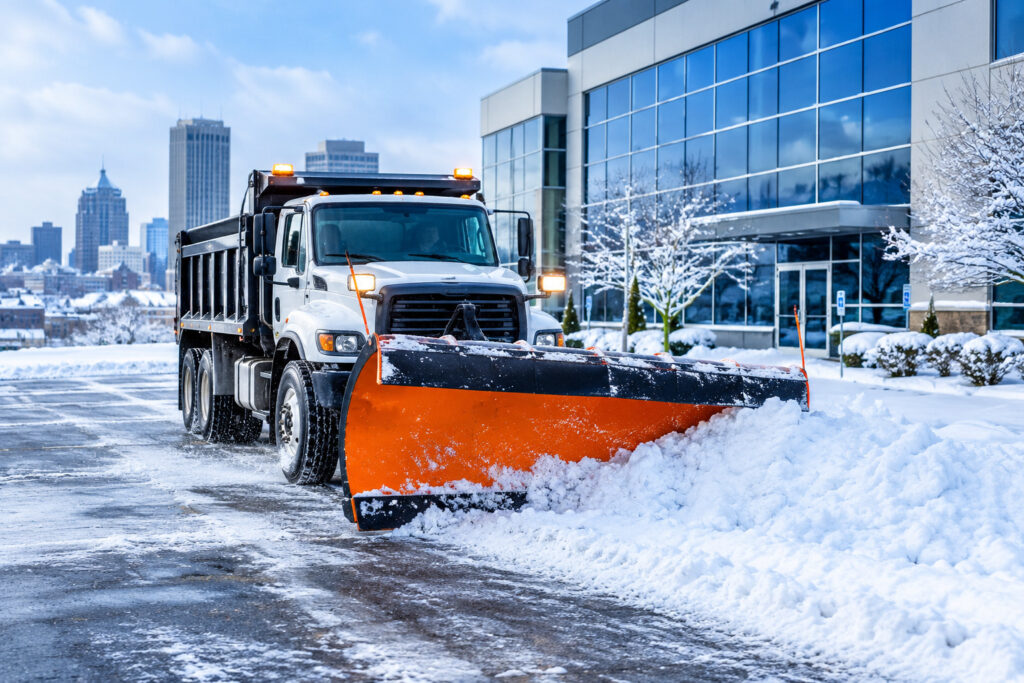
As a company built on landscaping expertise, we bring a broader perspective to winter operations than plow-only competitors. Our team understands how to clear snow and manage ice while protecting the pavement, curbs, and landscaping investments that contribute to your property’s overall appearance. When you choose our Commercial Snow Removal Rochester NY service, you’re working with a team that treats your property as a complete system throughout the entire year.
We also prioritize documentation and communication as core parts of our service rather than optional extras. Property managers working with us know exactly when crews are dispatched and have access to the service records that support liability protection. Whether you manage a single retail location or a multi-site portfolio, our approach to Snow Removal Rochester scales to fit the property in front of us.
Frequently Asked Questions
When should commercial planning begin for the winter season?
Late summer through early fall is ideal, since providers offering Commercial Snow Removal Rochester NY service often reach capacity before the season’s first major storm.
What should a commercial contract include at minimum?
Trigger depth, response time, scope of covered areas, pricing structure, documentation practices, and contingency plans should all be clearly defined in writing.
How important is documentation for commercial properties?
Very. Service logs can serve as critical evidence if a liability claim arises from a slip-and-fall incident on your property, which is why documentation should be a standard part of any Commercial Snow Removal Rochester NY agreement.
Is a site walkthrough really necessary before signing?
Yes. Walkthroughs surface details like snow storage limits and priority zones that rarely come up in a phone conversation, and they lead to more accurate quotes.
Should I choose the same provider for landscaping and Snow Removal Rochester NY service?
Many commercial clients do, since a single provider simplifies scheduling and reduces the risk of winter operations damaging landscaping investments.
Is searching for snow removal near me enough to find a commercial provider?
It’s a reasonable starting point, but commercial properties need providers with matching equipment scale, insurance, and staffing, so proximity alone isn’t sufficient.
How does pricing differ between seasonal and per-push commercial contracts?
Seasonal contracts offer one flat rate regardless of storm frequency, while per-push billing varies by visit, which can cost less in mild winters and more in heavy ones.