
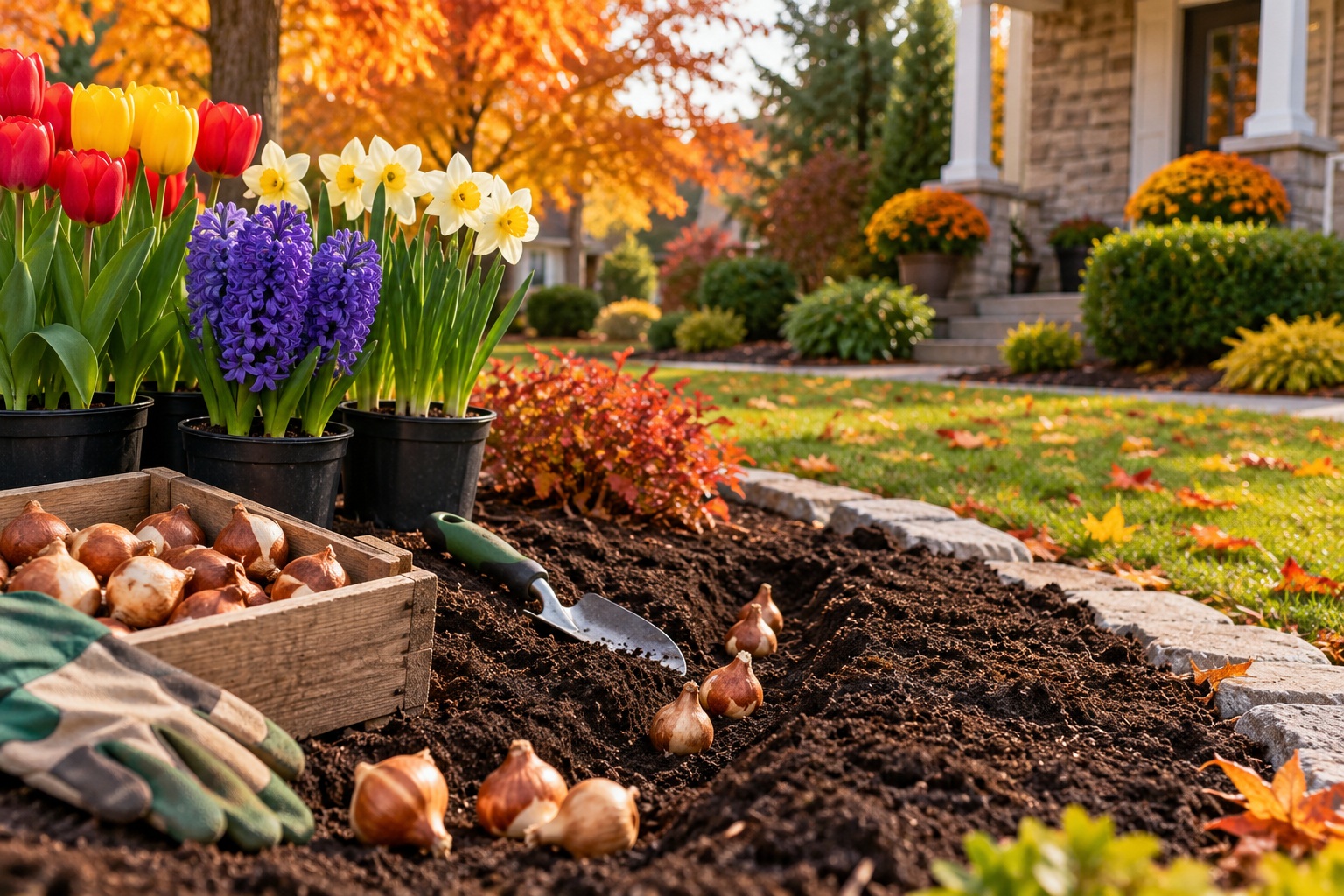
There’s a small, satisfying kind of magic in fall bulb planting. You spend a crisp autumn afternoon tucking bulbs into the ground, the yard looks completely bare for months, and then one morning in April, color just shows up out of nowhere. For Rochester homeowners looking to make the most of a short growing season, fall bulb planting is one of the easiest, most rewarding ways to guarantee a beautiful start to spring.
The timing matters more than most people realize, and so does bulb selection, depth, and placement. Get it right, and you’ll have a yard that bursts into color the moment winter finally lets go. Get it wrong, and you might be disappointed by patchy blooms or bulbs that never come up at all. Here’s what to know about fall bulb planting as part of your landscaping Rochester plans this season, and why it deserves a spot on every landscaping Rochester NY homeowner’s fall checklist.
Why Fall Is the Right Time to Plant Bulbs
It might seem counterintuitive to plant something right before the ground freezes, but spring-flowering bulbs actually need that period of cold dormancy to bloom properly. This process, called vernalization, is what triggers the biological signal for bulbs to flower once temperatures warm back up, and it’s a detail every good landscaping in Rochester NY plan factors into fall scheduling.
Reasons fall planting works so well for landscaping Rochester NY yards:
- Bulbs need a cold period to develop strong roots and trigger spring blooming
- Soil is still workable in fall, before the ground fully freezes
- Bulbs have all winter to establish roots without competing with active summer growth
- You get color the moment spring arrives, rather than waiting weeks for spring-planted flowers to catch up
- Fall planting requires less watering than spring planting, since cooler temperatures reduce moisture loss
When to Plant Bulbs in Rochester
Timing is one of the most important factors in successful bulb planting, and Rochester’s climate gives you a fairly specific window to work with, one that any experienced landscaping Rochester NY provider will already have mapped out.
General guidelines for our region:
- Aim for late September through October, ideally six weeks before the ground freezes solid
- Watch soil temperature, not just the calendar, since bulbs should go in once soil cools to around 50–60°F
- Don’t wait too long, since bulbs need time to establish roots before winter fully sets in
- It’s better to plant a bit early than too late, since bulbs planted too close to hard frost may not root properly
If you’re unsure about timing, a landscaper Rochester NY homeowners already work with for other projects can often help coordinate bulb planting with the rest of your fall yard cleanup.
Choosing the Right Bulbs for Rochester Gardens
Not every bulb performs equally well in Western New York’s climate and soil conditions. Choosing varieties suited to our winters makes a noticeable difference in bloom success, and it’s exactly the kind of detail that separates generic advice from real landscaping Rochester expertise.
Reliable bulb choices for landscaping in Rochester NY gardens include:
- Tulips — classic spring color, available in nearly endless varieties and bloom times
- Daffodils — hardy, deer-resistant, and reliably return year after year
- Crocuses — often the very first bloom of spring, sometimes pushing through late snow
- Alliums — architectural, long-lasting blooms that also resist deer and rabbits
- Hyacinths — fragrant, colorful, and a strong early-to-mid spring performer
- Grape hyacinths (muscari) — low-growing and excellent for naturalizing along borders
Mixing early, mid, and late-blooming varieties extends your spring color window significantly, rather than having everything bloom and fade within the same two weeks.
Proper Planting Depth and Spacing
Planting depth is one of the most common mistakes homeowners make with bulbs, and it directly affects whether they bloom well or struggle—a small detail that matters as much as any other step in landscaping Rochester NY projects.
General planting guidelines:
- Plant bulbs roughly three times as deep as the bulb is tall, as a simple rule of thumb
- Larger bulbs like tulips and daffodils typically go 6–8 inches deep
- Smaller bulbs like crocuses and grape hyacinths usually only need 3–4 inches
- Space bulbs based on their mature size, generally a few inches apart for smaller varieties and more room for larger ones
- Plant with the pointed end up, since this is typically where the shoot will emerge
Getting depth right protects bulbs from winter heaving and gives them the stability they need to establish strong roots.
Preparing Your Soil Before Planting
Rochester’s clay-heavy soil in many neighborhoods can make bulb planting more challenging if it’s not properly prepared. Bulbs are especially prone to rotting in soil that holds too much water.
Steps to prepare your beds:
- Amend heavy clay soil with compost to improve drainage and texture
- Choose well-drained locations, avoiding low spots where water tends to pool
- Loosen soil at least a few inches deeper than your planting depth to encourage healthy root growth
- Add a small amount of bulb fertilizer at planting time to support root development
- Avoid overly rich, wet soil, which increases the risk of bulb rot over winter
Good soil preparation is one of those steps that’s easy to skip but makes a real difference in bloom quality the following spring, a lesson that applies across most landscaping Rochester projects, not just bulb beds.
Protecting Bulbs From Pests
Squirrels, chipmunks, and deer can all be a real problem for freshly planted bulbs, sometimes digging them up within days of planting, a common frustration in landscaping Rochester NY yards near wooded areas.
Ways to protect your investment:
- Choose deer and rodent-resistant varieties like daffodils and alliums when pest pressure is a known issue
- Cover freshly planted beds with wire mesh temporarily until the ground settles
- Interplant with strong-scented bulbs like alliums, which can help deter some digging pests
- Water thoroughly after planting, which helps settle soil and reduces obvious digging cues
- Avoid leaving bulb packaging or planting debris nearby, which can attract curious wildlife
Designing With Bulbs for Maximum Impact
Bulbs look best when they’re planted with some intention behind the layout, rather than scattered randomly across a bed.
A few design approaches to consider:
- Plant in clusters or drifts rather than single rows for a more natural, impactful look
- Layer bloom times so color continues from late winter crocuses through late spring tulips
- Use bulbs to line pathways or borders, framing hardscaping features with seasonal color
- Combine bulbs with perennials that will grow up and hide fading bulb foliage later in spring
- Group by color family for a more cohesive visual effect rather than a scattered mix
Thoughtful bulb placement is a small detail that makes a big difference in how polished your yard feels once everything blooms, which is why it’s often part of a broader landscaping Rochester NY design plan rather than an afterthought.
Caring for Bulbs After Planting
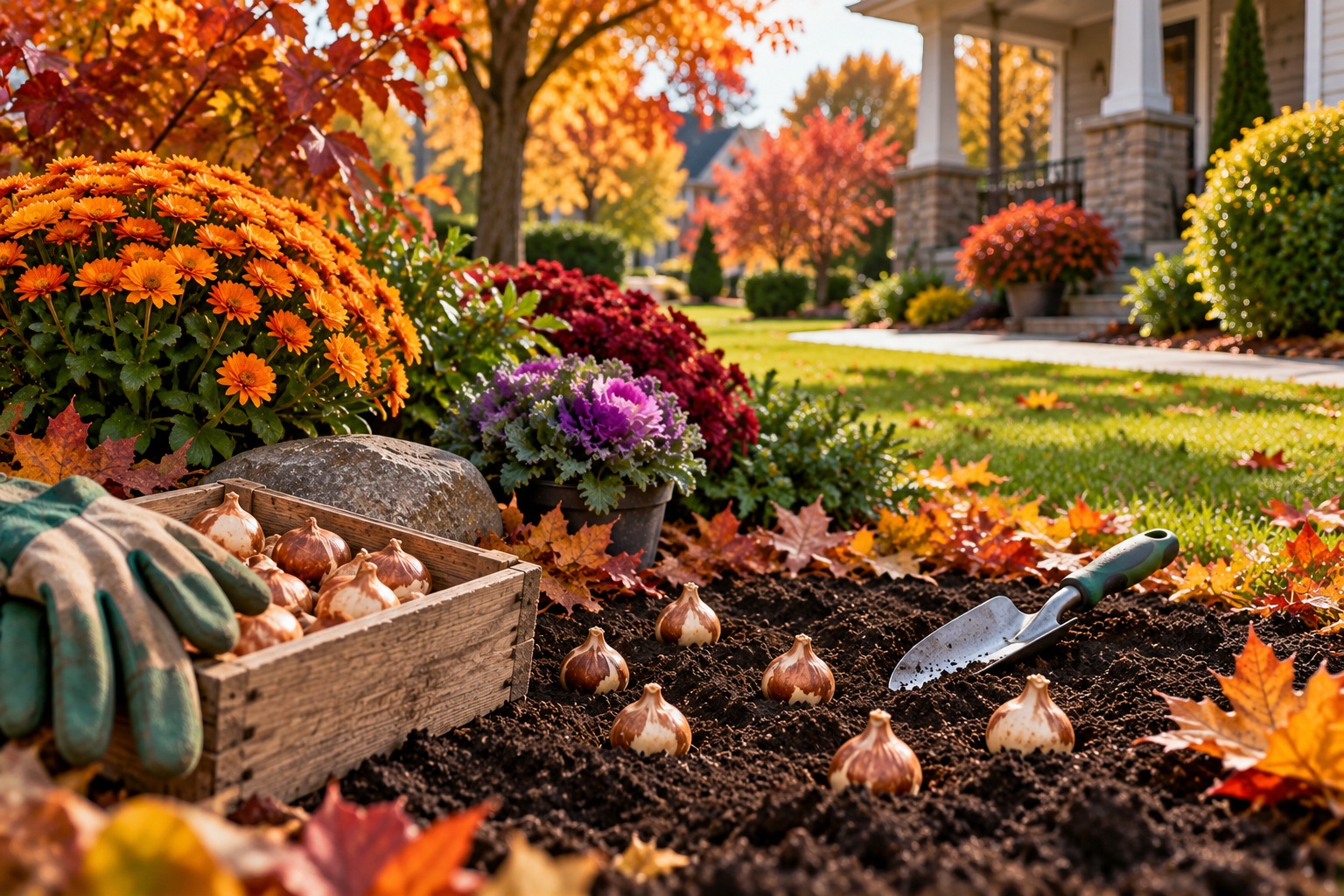
Once bulbs are in the ground, there’s relatively little to do until spring, but a few fall and early winter habits, familiar to anyone who follows good landscaping in Rochester practices, help support strong blooms.
- Water thoroughly right after planting to help roots establish before the ground freezes
- Add a layer of mulch over planted beds to regulate soil temperature and protect against extreme freeze-thaw swings
- Avoid walking over planted areas to prevent soil compaction above the bulbs
- Mark planting locations so you don’t accidentally dig into the same spot for other fall projects
- Let foliage die back naturally in spring after blooming, rather than cutting it early, since this feeds the bulb for next year’s bloom
Why Fall Bulb Planting Is Worth the Effort
It’s easy to put off bulb planting when the payoff is months away and the current to-do list is full of fall cleanup. But few landscaping projects offer as much reward for as little ongoing effort, which is exactly why fall bulb planting deserves a spot in any serious landscaping Rochester NY plan. A few hours of planting in October translates into weeks of reliable spring color with almost no additional maintenance required.
If you’re already working with a professional on fall cleanup or other landscaping Rochester projects, it’s worth asking whether bulb planting can be bundled into that same visit, since the soil prep and labor often overlap nicely with other seasonal yard work.
Frequently Asked Questions
What’s the best month to plant bulbs in Rochester NY?
Late September through October is generally ideal, giving bulbs enough time to establish roots before the ground fully freezes.
Can I still plant bulbs if I missed the ideal fall window?
It’s possible to plant later, but bloom quality may suffer if bulbs don’t have adequate time to root before hard frost sets in, so earlier is always safer.
Do spring bulbs come back every year?
Many bulbs, like daffodils and alliums, reliably return and multiply over time, while others, like some tulip varieties, may bloom best in their first year or two.
How deep should I plant tulip bulbs?
A general rule is to plant bulbs about three times as deep as the bulb itself, which typically means 6–8 inches for larger bulbs like tulips.
What can I do to stop squirrels from digging up my bulbs?
Choosing rodent-resistant varieties like daffodils, covering beds temporarily with wire mesh, and watering thoroughly after planting all help reduce digging activity.
Should I fertilize bulbs when I plant them?
Yes, a small amount of bulb-specific fertilizer at planting time supports strong root development going into winter dormancy.